2024 HRM Software Trends: Shape Future of HR Management Software

Stay ahead of the top HR Management software trends of 2024. From AI recruiting to remote work strategies, explore the innovations reshaping the future of HRM software.

HRMS Intro

In the rapidly evolving realm of Human Resource Management Systems (HRMS), staying abreast of emerging trends is paramount for organizational success.

As we approach 2024, the HR landscape continues its transformative journey, influenced by technological advancements, changing work dynamics, and evolving employee expectations.

Our latest blog delves into the top 9 HRMS trends that are set to redefine the way businesses manage their workforce in the coming year.
The ascent of Artificial Intelligence within Human Resource Management Systems marks a revolutionary shift in workforce management.

AI streamlines recruitment processes and enhances decision-making with predictive analytics.

By harnessing AI capabilities, HRMS platforms automate routine tasks and proactively shape workplace culture.

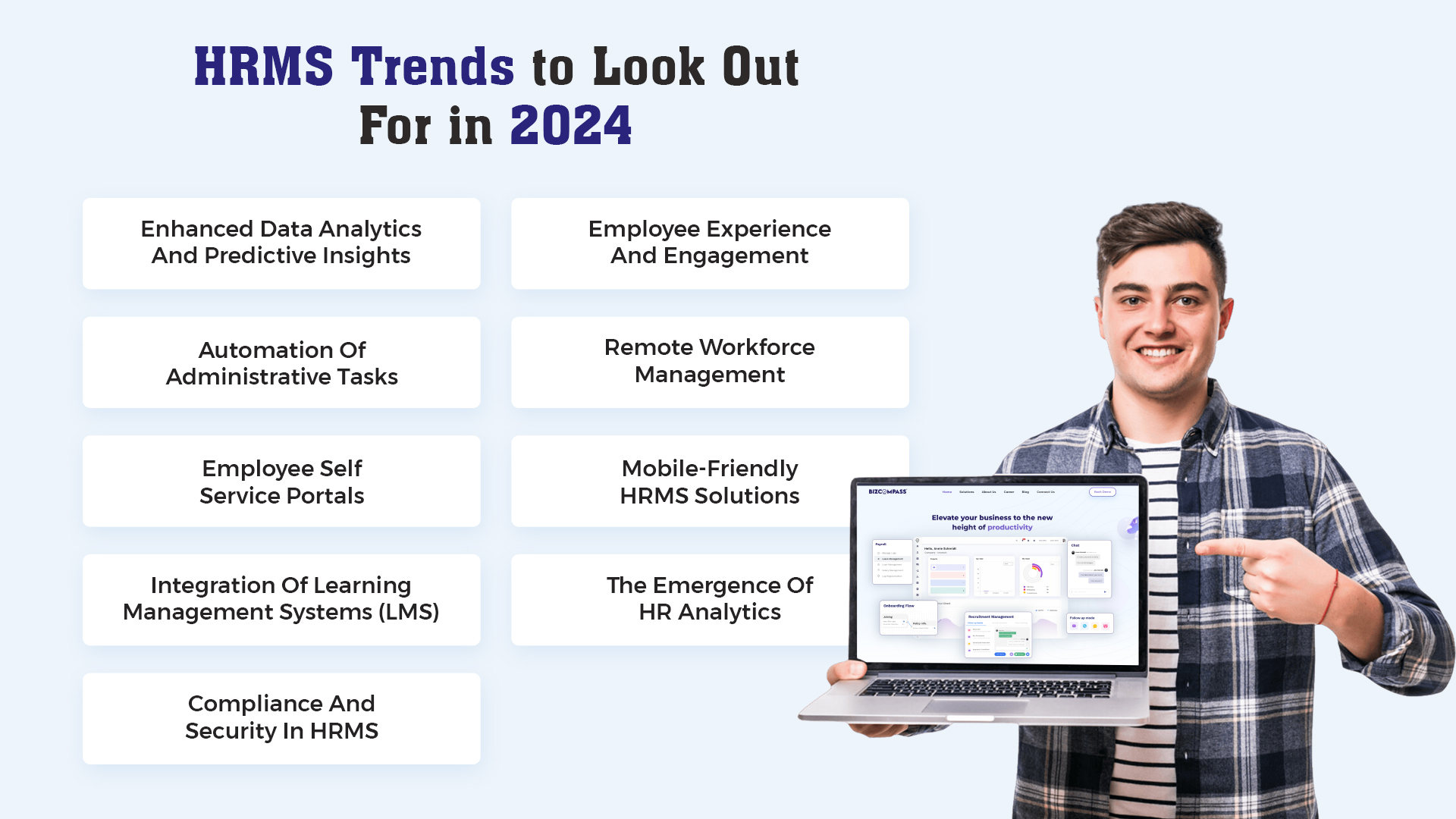
Harnessing the power of big data, organizations are poised to make intelligent decisions that transcend traditional HR practices.

By analyzing vast datasets, HRMS platforms provide a comprehensive understanding of workforce dynamics.

The integration of predictive analytics anticipates future trends and streamlines HR operations.

HRMS platforms are now instrumental in crafting personalized employee experiences and tailoring interactions and processes to individual needs.

A notable trend in fostering engagement is the incorporation of gamification within HRMS.

As we step into 2024, the amalgamation of personalized experiences and gamification within HRMS is reshaping the employee-employer relationship.

Remote Workforce Management emerges as a pivotal focus within Human Resource Management Systems.

With a significant shift towards remote and hybrid work models, HRMS platforms are adapting to ensure seamless collaboration and efficient management of dispersed teams.

Integration of collaboration tools within HRMS enables remote teams to collaborate effectively.

HRMS platforms are increasingly incorporating automation to streamline administrative tasks, reducing manual workloads and enhancing overall productivity.

From automating routine paperwork to expediting onboarding processes, this shift allows HR professionals to focus on strategic initiatives rather than repetitive administrative duties.

The integration of chatbots within HRMS provides efficient and instant support to employees.

The surge in Mobile-friendly HRMS Solutions signifies a transformative leap in Human Resource Management Systems, adapting to the mobile-centric nature of the modern workforce.

In 2024, HRMS platforms prioritize accessibility through dedicated mobile apps, empowering users to manage HR-related tasks anytime, anywhere.

Whether it's submitting leave requests, accessing performance reviews, or staying updated on company communications, the mobile-friendly HRMS paradigm ensures that critical HR functions are at the fingertips of users.

Employee Self-Service Portals redefine the HR landscape by putting empowerment directly into the hands of employees. In 2024, Human Resource Management Systems prioritize these portals, offering a user-friendly interface for employees to manage various aspects of their work-life independently.

From requesting leaves and accessing benefits information to updating personal details, these portals streamline administrative tasks, saving time for both employees and HR professionals.

By providing a centralized platform for self-service options, HRMS contributes to a more efficient and transparent workplace.

The Integration of Learning Management Systems marks a strategic evolution within Human Resource Management Systems.

Organizations are increasingly adopting HRMS solutions that seamlessly integrate with LMS, creating a unified platform for comprehensive talent management.

This integration facilitates a more fluid and effective approach to employee development and personalized learning journeys.

In the ever-evolving landscape of Human Resource Management Systems, the focus on Compliance and Security takes center stage.

HRMS solutions are designed with stringent compliance frameworks, aligning with regulatory standards to safeguard sensitive employee information.

These systems employ advanced encryption, access controls, and secure authentication protocols, bolstering defenses against potential cyber threats.

By utilizing advanced analytics tools, HRMS platforms empower decision-makers to glean insights from vast datasets.

This data-driven approach extends beyond traditional HR functions, influencing strategic initiatives such as talent acquisition, retention, and workforce planning.

HRMS emerges as a key driver in navigating the complexities of the modern workforce.

As we anticipate the trajectory of Human Resource Management Systems (HRMS) in 2024, it is evident that a wave of transformative trends is reshaping the landscape of workforce management.

The mobile-friendly approach, emphasis on employee self-service portals, and the pivotal role of HR analytics underscore a commitment to enhance the employee experience and optimize the HR process.

The confluence of these top HRMS trends streamlines administrative tasks and positions HR as a strategic partner.