Data Visualization Dashboards
Visual representation of HR metrics and insights through data visualization dashboards simplifies data interpretation. Customizable dashboards cater to different user roles.
HRMS software leverages historical data for future workforce planning. By forecasting trends and potential HR challenges, organizations can address issues and optimize their workforce.
Generating ad-hoc reports tailored to specific needs is another valuable feature of HRMS software. The ability to export data in various formats for analysis ensures that HR teams can access the information they need when they need it.
In today’s scenario, Employee self-service is one of the pivotal features of HRMS software. This functionality empowers employees to take control of their HR-related tasks, reducing the administrative burden on HR teams.
Here are some key aspects of employee self-service:
Leave Management: Employees can request and track their leaves, while HRMS software automates leave accrual and approval processes.
Benefits Enrollment: Employees can select and manage their benefits, such as health insurance and retirement plans, through the software.
Timesheet Submission: Hourly employees can submit timesheets, and supervisors can review and approve them electronically.
Mobile Accessibility
In an increasingly mobile workforce, HRMS software must offer mobile accessibility. This feature of HRMS software allows employees and managers to access HR functions on the go, ensuring that HR processes are not tied to a physical office.
Mobile apps or responsive web interfaces enable users to:
Check pay stubs and tax information.
Submit expenses and receipts.
Approve leave requests.
Access company policies and documents.
Employee Engagement Tools
Employee engagement is one of the crucial features of HRMS software that drives productivity and retention. HRMS software can include tools to enhance engagement, like:
Surveys and Feedback: Conducting employee surveys and collecting feedback to gauge satisfaction and identify areas for improvement.
Recognition and Rewards: Recognizing and rewarding employees for their achievements and contributions through the software.
Employee Communities: Facilitating communication and collaboration among employees through social features or chat platforms.
Document Management And Storage Features Of HRMS Software
Maintaining a secure and organized repository of HR-related documents is essential for compliance and data accessibility. HRMS software includes document management features, allowing HR teams to store, categorize, and retrieve documents such as employment contracts, performance appraisals, and policy manuals. This feature streamlines document tracking and ensures that sensitive HR data is kept secure and readily accessible.
Workflow automation features in HRMS software enable HR professionals to create and manage HR processes efficiently. HR teams can design automated workflows for tasks such as onboarding, offboarding, and performance appraisals. These automated processes reduce manual work, eliminate errors, and ensure consistency in HR operations.
Employee Performance Analytics Features Of HRMS Software
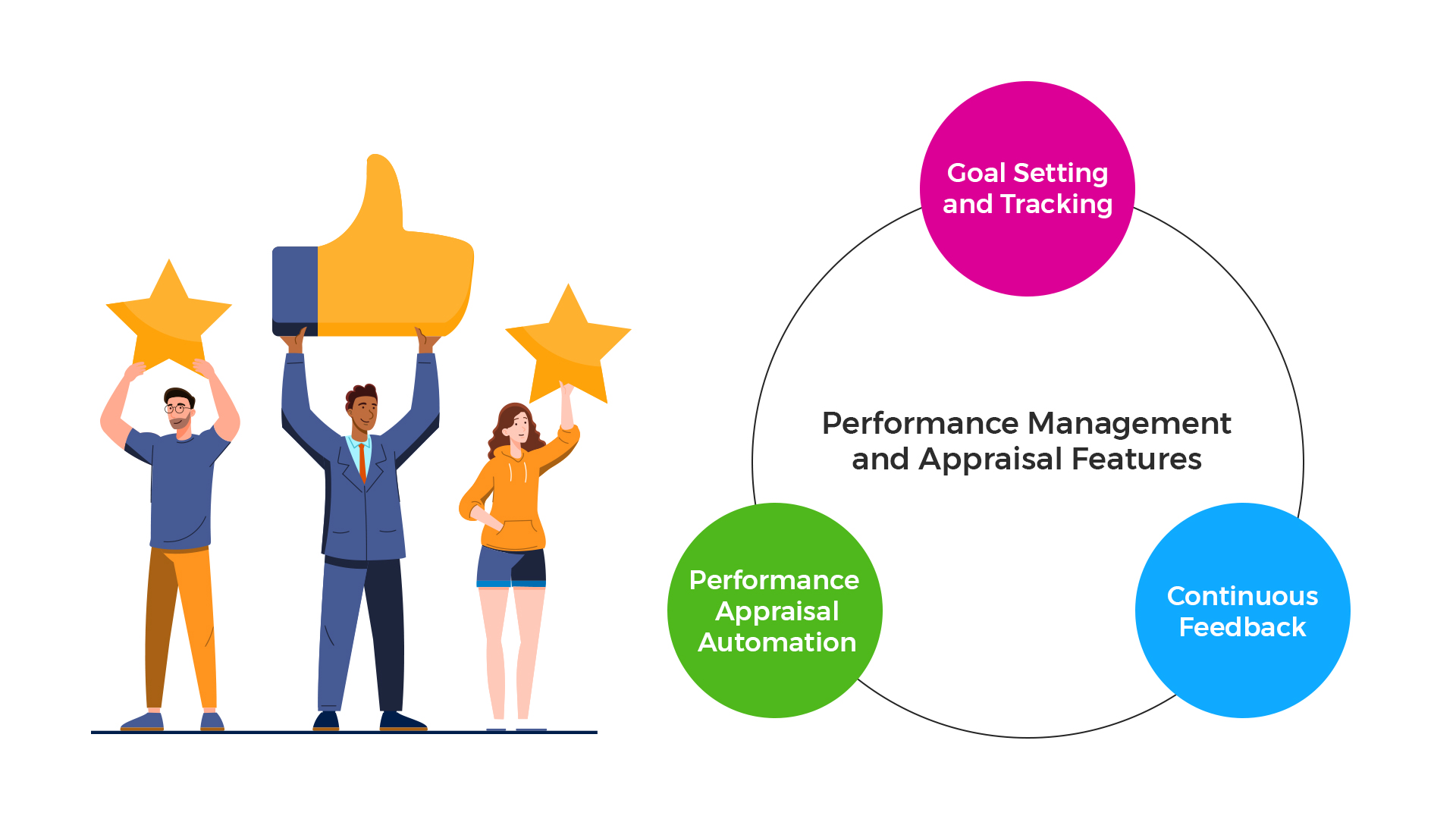
HRMS software can provide advanced performance analytics capabilities. It goes beyond traditional performance metrics and offers a deep analysis of employee performance data.
This feature allows HR professionals to identify trends, patterns, and outliers in performance data, helping organizations make data-driven decisions to improve workforce productivity.
Employee Benefits Administration
Managing employee benefits is a complex task, but HRMS software simplifies the process. It allows HR professionals to efficiently handle benefits enrollment, track employee contributions, and manage benefit providers.
Moreover, it enables employees to change their benefits selections during open enrollment periods, promoting transparency and ease of access to crucial benefits information.
Ensuring compliance with labor laws and regulations is a top priority for HR.
HRMS software can help by:
Automating compliance checks and alerts.
Generating compliance reports for audits.
Staying updated with changing regulations and adjusting policies accordingly.
Integration Capabilities
Seamless integration with other business systems is one of the vital features of HRMS Software for efficient operations. A good HRMS software should offer integration options for:
Accounting and financial systems.
Benefits providers.
Time and attendance systems.
Performance management tools.