Efficiently utilize HRMS software by prioritizing comprehensive employee training to ensure widespread adoption. Streamline processes such as payroll, benefits, and attendance tracking, reducing manual efforts and errors. Implement self-service features, empowering employees and minimizing administrative tasks. Regularly update and optimize the system to leverage the latest features and improvements. Foster a culture of continuous improvement and feedback to enhance HRMS usage.
By maximizing the potential of HRMS software, organizations can elevate productivity, accuracy, and overall efficiency in managing their human resources, contributing to an agile and successful workplace.
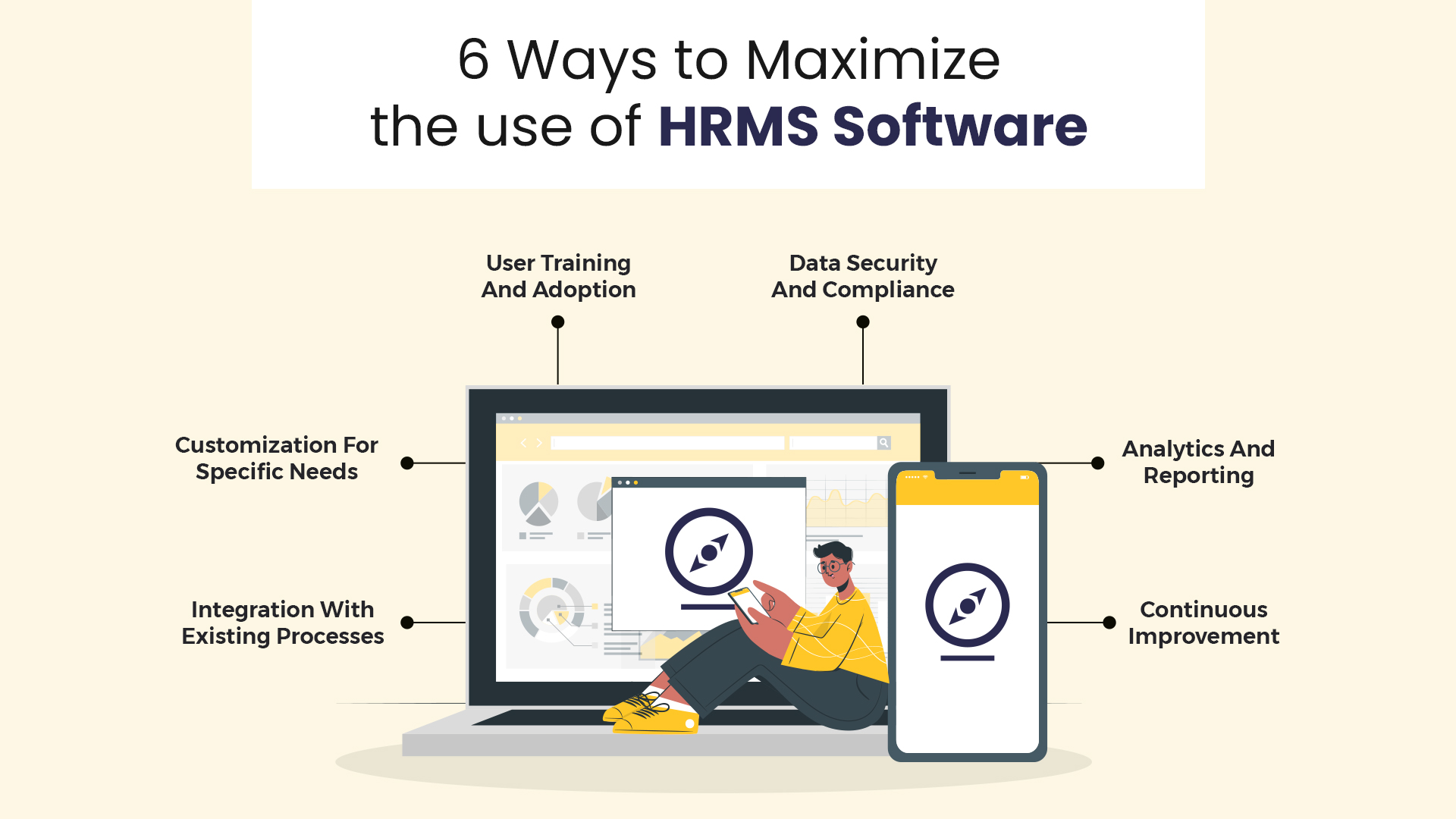
Let's have a look at a few points on maximizing the use of HRMS software in detail.
Integration With Existing Processes
Compatibility with other software systems, such as accounting or project management tools, enables a cohesive workflow and avoids data silos.
A well-integrated HRMS facilitates data synchronization across departments, fostering real-time collaboration and ensuring consistency in information. This not only streamlines administrative tasks but also enhances the accuracy of shared data, reducing the risk of discrepancies.
By aligning HRMS with existing processes, organizations can maximize the software's impact, creating a more interconnected and efficient operational environment.
This integration not only saves time but also promotes a holistic approach to data management, allowing for better decision-making and improved overall organizational performance.
Customization For Specific Needs
Customization is key to maximizing the effectiveness of HRMS software, allowing organizations to tailor features to meet specific needs. The ability to customize ensures that the software aligns seamlessly with the unique requirements of the organization, accommodating industry-specific workflows and compliance standards.
Optimal HRMS solutions offer flexibility in module selection and configuration, empowering businesses to choose and adapt functionalities according to their priorities. This not only enhances user experience but also promotes efficient utilization of resources.
Whether it's adapting performance management, payroll, or employee onboarding, customization allows organizations to mold the HRMS to their distinct processes, fostering a more responsive and agile human resources management system.
In essence, customization empowers businesses to leverage the full potential of HRMS, aligning technology with their specific organizational objectives.
User Training And Adoption
Providing comprehensive training sessions for both employees and HR personnel ensures a smooth transition and optimal utilization of the system.
Training should encompass key features, data input procedures, and troubleshooting guidance. Encouraging regular usage through ongoing training initiatives fosters proficiency and helps users stay updated on system enhancements. Emphasizing the benefits of the HRMS, such as time savings and improved accuracy, enhances motivation for adoption.
Additionally, creating user-friendly interfaces and support channels encourages a positive user experience, reducing resistance to change. By investing in training and promoting ongoing adoption, organizations can capitalize on the full potential of HRMS, resulting in increased efficiency, streamlined processes, and a more empowered workforce.
Data Security And Compliance
Implementing robust data protection measures, such as encryption and access controls, safeguards sensitive employee information from unauthorized access or breaches.
Compliance with privacy regulations, such as GDPR or HIPAA, is crucial for maintaining legal and ethical standards in handling personal data. Regular audits and updates to security protocols are essential to adapt to evolving threats. By prioritizing data security, organizations not only protect their employees' confidential information but also build trust within the workforce.
Demonstrating a commitment to compliance not only mitigates legal risks but also reinforces the organization's reputation as a responsible steward of data.
Ultimately, a secure and compliant HRMS ensures the confidentiality and integrity of HR-related information, contributing to a robust and trustworthy human resources management system.
HR analytics provides data-driven insights into workforce trends, employee performance, and other crucial metrics. This information empowers HR professionals and organizational leaders to make informed decisions about talent management, resource allocation, and strategic planning.
Customizable reporting tools within the HRMS enable the generation of detailed, real-time reports tailored to specific organizational needs. This flexibility allows for a deeper understanding of HR processes and facilitates proactive decision-making.
By harnessing the power of analytics and reporting, organizations can optimize their human resources management, identify areas for improvement, and align their strategies with the overall goals of the business. This data-centric approach enhances efficiency and effectiveness, contributing to a more agile and responsive organizational structure.
Regularly assessing the effectiveness of the software ensures that it aligns with evolving organizational needs and industry best practices. Gathering user feedback from both employees and HR personnel provides valuable insights into user experiences and identifies areas for enhancement. This iterative feedback loop allows organizations to address issues promptly, implement necessary updates, and optimize the software's functionalities.
Additionally, staying abreast of technological advancements and industry trends enables organizations to incorporate new features that further improve HRMS performance.
By fostering a culture of continuous improvement, organizations can adapt their HRMS to changing requirements, maximize efficiency, and ensure that the system remains a strategic asset in enhancing overall human resources management.